 Jerusalem Israel Tours
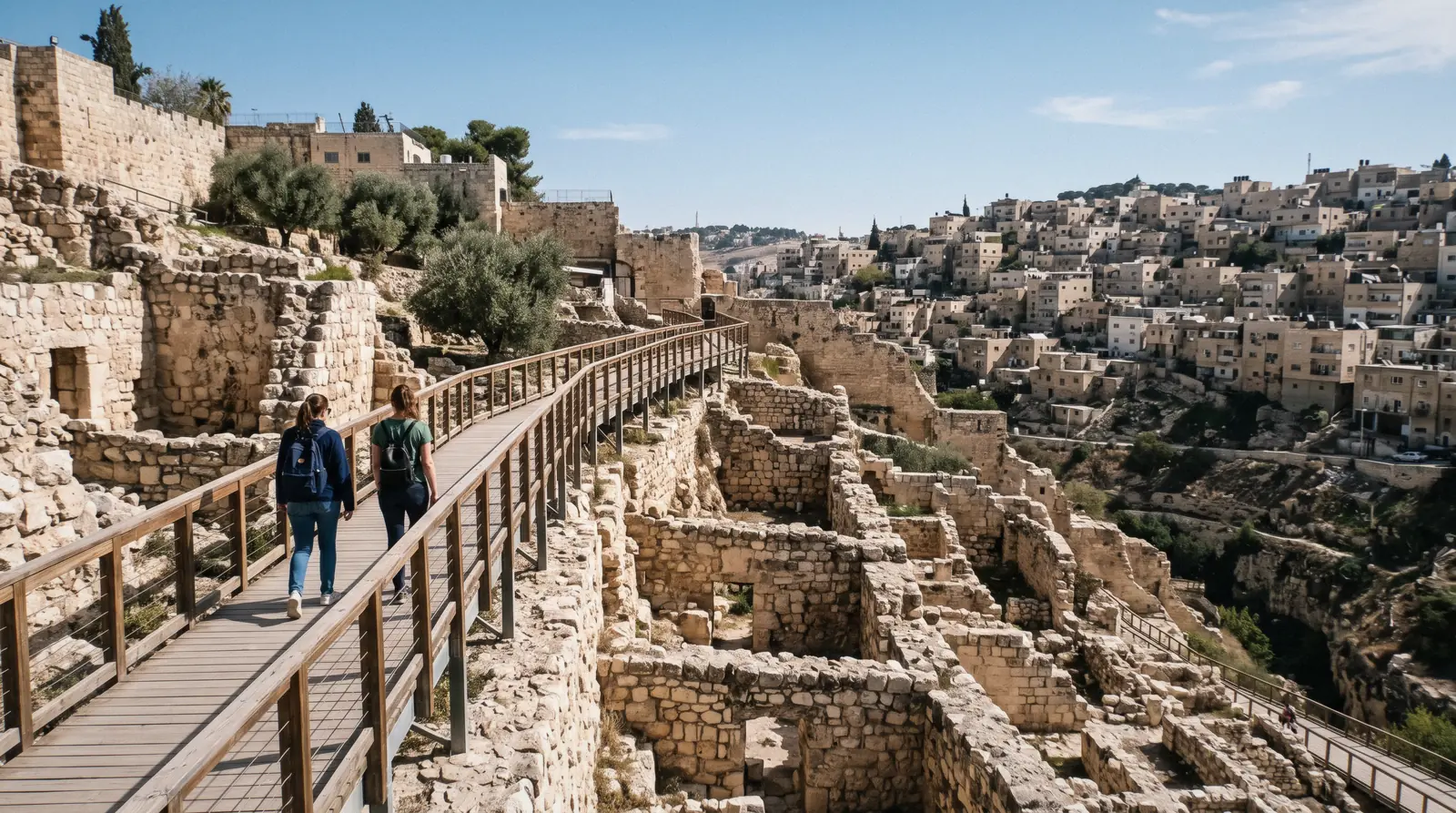
The City of David is the archaeological ridge just south of the Jerusalem Old City, considered by most scholars to be the original settlement core of ancient Jerusalem. Its two headline sights are Hezekiah's Tunnel, a water tunnel you can walk through, and the Pool of Siloam at its end. This guide compares every way to see it, including two full-day City of David tours you can book below. For the full shortlist, see the top Jerusalem tours.
Quick answer City of David at a glance
The City of David is an archaeological park just south of the Old City walls, where ancient Jerusalem began on a ridge above the Gihon Spring. Visitors walk through Hezekiah's Tunnel, a water tunnel cut about 2,700 years ago, and end at the Pool of Siloam. Self-guided entry costs $5.18 (16 NIS) and takes about an hour and a half, or you can join a full-day guided tour from $89.
Key takeaways
- Book the City of David and Underground Jerusalem day tour if you want hotel pickup and the whole story in one day.
- Walking alone? Self-guided entry is $5.18 (16 NIS) and the dry Canaanite channel skips the water. See things to do in Jerusalem for the rest of the city.
- Bring water shoes and a change of clothes for the wet route, the water reaches 70 cm deep.
Key facts
Opening hours
| Sun-Thu, winter | 08:00–17:00 |
|---|---|
| Fri, winter | 08:00–13:00 |
| Sun-Thu, summer | 08:00–19:00 |
| Fri, summer | 08:00–16:00 |
Closed Last entry to the water tunnel 2.5 hours before closing
Planning it
- Time needed
- Our estimate: about an hour and a half for the self-guided route, longer for the wet route
- Book ahead
- Optional — walk-up usually fine
- Address
- Jerusalem Walls National Park, south of Dung Gate, Jerusalem
City of David tickets and tours compared
Two bookable full-day tours cover the City of David and the underground sites. Both include transport and a live guide. The table shows what each costs, how long it runs and what the price covers, so you can pick between them.
Do you want hotel pickup with fees paid on the day, or entry fees included and a Mount of Olives viewpoint at the end?
| Option | Price | Length | Includes | Book |
|---|---|---|---|---|
| City of David and Underground Jerusalem Day TourTravellers who want hotel pickup anywhere in Jerusalem and do not mind paying entry fees on site | from $89 | 8 hours | Hotel pickup, guide in English, French, German or Spanish, the excavations, the Pilgrimage Road, the Jewish Quarter and the Cardo. Entrance fees extra, about $10 per person | Check Availability |
| Jerusalem: City of David, Underground Jerusalem Day TourTravellers who want one price with all entry fees in and King David's Tomb plus the Mount of Olives viewpoint added | from $89 | 9 hours | Meeting at the David Citadel Hotel, entry fees included, the excavations, the Pilgrimage Road, King David's Tomb and the Mount of Olives viewpoint | Check Availability |
The self-guided option costs $5.18 (16 NIS) on the gate, the guided Biblical City of David tour starts from $14.56 (45 NIS) and the Hallelujah night show from $16.50 (51 NIS). Figures current in Q4 2026.
Bookable City of David tours
Both tours below run full days from Jerusalem and cover the excavations and the Pilgrimage Road. Each can be cancelled free up to 24 hours before the start.
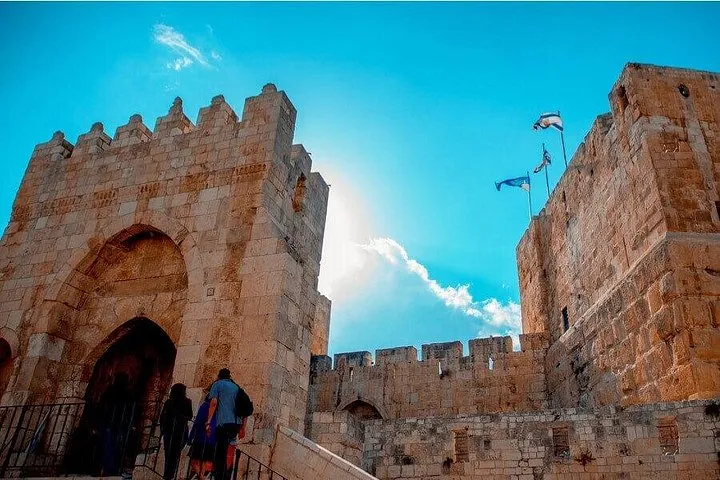 from $89
Underground
City of David and Underground Jerusalem Day Tour
The City of David excavations, the Pilgrimage Road, the Jewish Quarter and the Cardo, from your hotel.
Check Availability from $89
Entry included
Jerusalem: City of David, Underground Jerusalem Day Tour
The excavations, the ancient Pilgrimage Road, King David's Tomb and the Mount of Olives viewpoint in a full day.
Check AvailabilityPrices, ratings and details are the platform's own. dollar figures are the listed prices — the platform bills in your account's currency.
What the City of David is and why it matters
A narrow ridge of stone outside the modern walls holds the earliest layers of Jerusalem. Understanding the geography explains everything you see on a City of David tour.
The ridge where Jerusalem began
Most scholars identify the City of David as the original settlement core of Jerusalem during the Bronze and Iron Ages. It sits on the southern part of the eastern ridge of ancient Jerusalem, west of the Kidron Valley and east of the Tyropoeon Valley, immediately south of the Temple Mount and separated from it by a saddle called the Ophel. The whole reason a city grew here was water. The Gihon Spring, at the foot of the eastern slope, is the only reliable spring nearby, and Bronze Age fortifications around it still survive.
That geography decides your route today. You walk downhill from the visitor centre, past the excavations, to the spring, then through the water systems to the Pool of Siloam. The park is part of the Jerusalem Walls National Park, managed by the Israel Nature and Parks Authority and operated by the Ir David Foundation.
What the Bible and the archaeology say
Two monumental Iron Age structures, the Large Stone Structure and the Stepped Stone Structure, were found on the ridge. Scholars debate whether they can be identified with the period of King David or date to a later era, so treat any guide's claim about them as one view among several. The site is nonetheless central to biblical archaeology, and Jewish tradition connects it directly with the reign of David.
The Siloam Tunnel, better known as Hezekiah's Tunnel, carries the strongest link to a named king. The common hypothesis dates it to the reign of Hezekiah of Judah in the late 8th century BC, matching the conduit mentioned in 2 Kings 20, where the Bible says Hezekiah blocked the waters of the upper Gihon and led them down to the City of David before an Assyrian siege. Radiocarbon and uranium-thorium dating supported that date, though excavations in 2011 suggested a possible earlier origin in the late 9th or early 8th century BC.
City of David or Bethlehem? Clearing up the name
Searchers often ask whether the City of David is in Jerusalem or Bethlehem. Both names exist, and they are different things. Bethlehem, a Palestinian city in the West Bank about 10 km south of Jerusalem, is called the City of David because David was born there, and you can visit it on a Bethlehem tour from Jerusalem. The City of David archaeological park, the one with Hezekiah's Tunnel and the Pool of Siloam, is in Jerusalem, and that is what this guide covers.
If your goal is the tunnel walk, the excavations or the Pilgrimage Road, you want this site, reached on foot from Dung Gate in minutes. If your goal is the Church of the Nativity, you want Bethlehem instead.
What you see, in walking order
The site runs downhill from the visitor centre to the Pool of Siloam. Here is the sequence most visits follow, so you know what each stop adds.
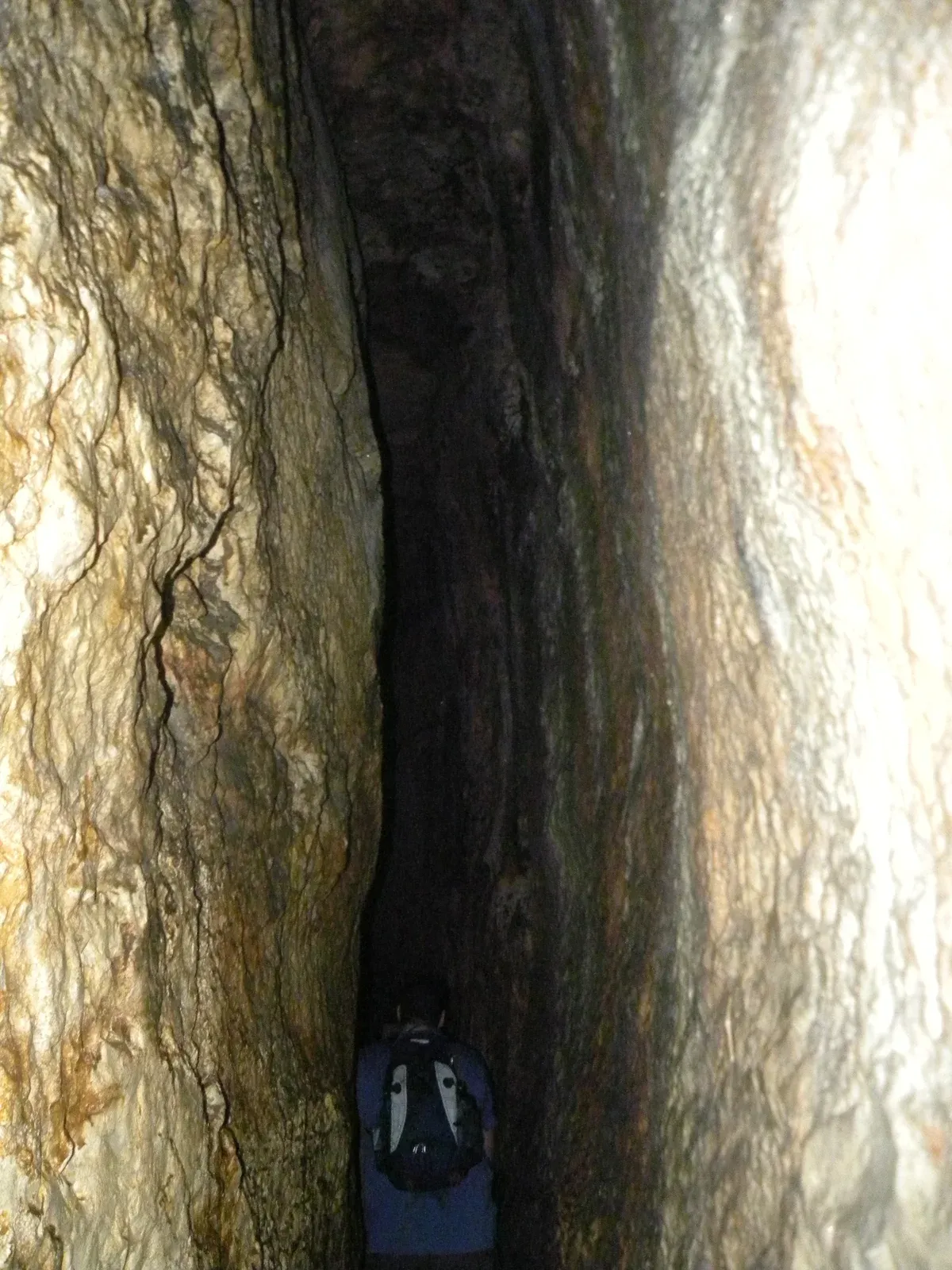
Inside the Siloam tunnel, also called Hezekiah's Tunnel, on the wet route. Photo: Ian Scott, CC BY-SA 2.0, via Wikimedia Commons
Visitor centre and the viewpoint
You start at the City of David visitor centre, where tickets are sold and the 3D film or the spring presentation can be added for $4.85 (15 NIS) on top of entry. The rooftop lookout gives you the layout in one glance. Below you lies the ridge, the Kidron Valley to the east and, across the saddle to the north, the Temple Mount plateau and the domes above the Western Wall plaza.
Take three minutes here before descending. Every trench and wall below makes more sense once you can see the ridge line and the two valleys that protected it.
The excavations and the great structures
The descent crosses the excavation area, where the Large Stone Structure and the Stepped Stone Structure dominate. These are the monumental Iron Age remains that started the debate about the scale and date of early Jerusalem. Interpretation signs set out the competing readings, and a guide will give you their own view.
From here the route heads down towards the Gihon Spring, passing remains of the defensive network that ringed the spring from the Middle Bronze Age onwards. The spring stayed in use through every later period, which is why the water systems below grew so complex.
Hezekiah's Tunnel or the dry Canaanite channel
At the spring you choose. The wet route runs through Hezekiah's Tunnel itself, about a 30 to 40 minute wade through a hand-carved rock tunnel where the water reaches 70 cm deep in places. You need water shoes and a change of clothes, and a flashlight is used on guided visits. The tunnel leads from the Gihon Spring to the Pool of Siloam.
The dry route follows the older Canaanite channel, a water system dating back to the Bronze Age that partly served the same purpose of keeping the spring's water inside the defended area. It skips the wading entirely, which makes it the right pick for anyone with camera equipment, small children in pushchairs or no spare clothes. Both routes end at the same place.
The Pool of Siloam and the Pilgrimage Road
The Pool of Siloam is a set of rock-cut pools southeast of the Old City walls, fed by the waters of the Gihon Spring through the tunnel. In the early Roman period the pool served pilgrims, and the Stepped Street, also called the Pilgrimage Road, climbed from the pool up to the Temple Mount. Excavated sections of that street are now walked on guided tours.
The self-guided ticket does not include the Davidson Archaeological Park, which sits at the southwestern corner of the Temple Mount near the top of the street. If the Pilgrimage Road is your priority, a guided City of David tour or the Biblical City of David guided walk covers the full line of the street.
Hours, dress and quiet times
The park opens at 08:00 from Sunday to Friday. In winter it closes at 17:00 from Sunday to Thursday and at 13:00 on Friday, in summer at 19:00 and 16:00.
When to go
The last entry to the water tunnel is 2.5 hours before closing, so a Friday visit in winter means reaching the tunnel by 10:30. What we can say with confidence is what happens around you. The site fills with school groups and coach parties through the middle of the day, so our estimate is that the first hour after opening and the later afternoon are the calmest slots in the tunnels.
Shabbat shapes the week across Jerusalem. From Friday sunset to Saturday nightfall Israeli public transport stops, so plan how you reach the site on a Friday and do not count on buses or the light rail on Saturday. The two full-day tours here run on set days with hotel pickup, which removes the transport question entirely.
Dress and what to carry
This is an outdoor archaeological park, so dress for walking and sun rather than for a holy site. The decisive item is footwear for the wet route. Water shoes or sandals with a grip are the difference between an easy wade and a slip, because the tunnel floor is cut rock and the water reaches 70 cm. Pack a full change of clothes or at least shorts and a towel, and a small flashlight is useful even on self-guided walks.
Leave anything that cannot get wet in a locker or with a non-wading companion. The dry Canaanite channel route needs none of this, so if you would rather not wade, say so at the ticket desk and take the dry path.
Getting there
The park entrance sits just outside Dung Gate, at the southern tip of the Old City. Most visitors arrive on foot from the walls or on a tour coach.
On foot from the Old City
The shortest approach is through Dung Gate in the southern wall of the Jerusalem Old City. From the Western Wall plaza it is a short walk downhill to the gate and the park entrance beyond it, our estimate is ten to fifteen minutes from the plaza at an easy pace. Coming from Jaffa Gate, allow around 25 to 30 minutes through the Armenian and Jewish Quarters, and treat that as an estimate since walking distances in the alleys vary with your route.
Combining the two in one morning works well. See the Wall plaza and the view over the Temple Mount plateau first, then drop through Dung Gate for the tunnel. If you are following a wider plan, the three-day Jerusalem itinerary slots the City of David neatly against an Old City day.
By tour, and from further out
Both City of David tours here solve the journey for you. The City of David and Underground Jerusalem Day Tour picks up at Jerusalem hotels and the nine-hour version meets at the David Citadel Hotel on King David Street, a few minutes walk from Jaffa Gate. If you are coming from the coast, the Tel Aviv to Jerusalem train reaches Yitzhak Navon station next to the Central Bus Station in about 35 to 45 minutes, from where a taxi or the light rail gets you to the Old City walls.
On foot from the station area is not realistic, so use transport for that leg. Read our page on getting around Jerusalem for the light rail and Shabbat timetables before you fix a day.
How much time to give it
The self-guided circuit runs about an hour and a half, but your real total depends on the route you pick through the water systems and what you add.
Choosing your slot length
Allow about an hour and a half for the self-guided entry, which suits all ages. Add time for the 3D show or the spring presentation at $4.85 (15 NIS), and add more if you take the wet route, since changing clothes and moving at tunnel pace stretches the visit. A guided Biblical City of David tour runs three hours and includes site admission and the tunnel by flashlight, which is the deeper option if the archaeology is the reason you came.
Half a day on site is our estimate for doing the tunnel, the pool and the Pilgrimage Road without rushing. That leaves the rest of the day for the Western Wall and the Jewish Quarter above, which is exactly how the full-day tours sequence it.
Three ways to route your visit
The table below sets out three practical routings. The walking times are our estimates and the prices are as published.
Both full-day tours combine the site with the Jewish Quarter, the Cardo and the Mount of Olives viewpoint, so they replace the routing question with a fixed plan.
| Routing | Time on site | Best for |
|---|---|---|
| Self-guided, dry route through the Canaanite channel, $5.18 (16 NIS) | About 1.5 hours (our estimate) | Families and anyone who wants to skip the water and the kit |
| Self-guided, wet route through Hezekiah's Tunnel, $5.18 (16 NIS) plus water shoes and a change of clothes | About 2 hours (our estimate) | Travellers who want to wade the tunnel itself at their own pace |
| Guided Biblical City of David tour, from $14.56 (45 NIS), 3 hours, includes admission and the tunnel by flashlight | 3 hours | Visitors who want the archaeology explained and the tunnel lit |
The City of David through time
Eight dated steps tell the story of the ridge, from the first fortifications to today's national park.
-
Middle Bronze Age
Fortifications around the Gihon Spring
Remains of a defensive network were built around the spring, the only reliable water source, and the site remained in use through later periods.
-
c. 1000 BC
The biblical era of David
Jewish tradition places King David's Jerusalem on this ridge, and the site carries his name today.
-
Iron Age
The Large Stone and Stepped Stone structures
Two monumental structures were uncovered on the ridge, and scholars debate whether they can be identified with David or date to a later period.
-
late 8th century BC
Hezekiah's Tunnel
The common hypothesis dates the tunnel to Hezekiah's reign, preparing Jerusalem for an Assyrian siege by diverting the Gihon's waters, as described in 2 Kings 20, though 2011 excavations suggested a possible earlier origin.
-
Early Roman period
The Pool of Siloam and the Pilgrimage Road
Rock-cut pools fed by the tunnel served pilgrims, and the Stepped Street climbed from the pool to the Temple Mount.
-
20th century
Modern excavation
Archaeologists gradually uncovered the ridge, the water systems and the pool, and the area carried several different names through the century.
-
2015
The renaming controversy
Jerusalem's municipality renamed the area around the site using Hebrew names referencing the City of David, a move strongly opposed by local East Jerusalem residents, who know the location as Wadi Hilweh in the neighbourhood of Silwan.
-
Today
Jerusalem Walls National Park
The excavated areas form part of the national park, managed by the Israel Nature and Parks Authority and operated by the Ir David Foundation, and open to visitors.
Sources: Wikipedia articles on the City of David archaeological site, the Siloam tunnel and the Pool of Siloam.
City of David dos and don'ts
Six things to do and five to skip, drawn from how the site actually works.
Do
- Book at least a day ahead, especially for the wet route, since tunnel capacity is limited.
- Pack water shoes, shorts and a towel for Hezekiah's Tunnel, the water reaches 70 cm deep.
- Take the rooftop viewpoint at the visitor centre first, it makes the whole ridge legible.
- Choose the dry Canaanite channel if you cannot get wet, it ends at the same Pool of Siloam.
- Add the 3D show or spring presentation for $4.85 (15 NIS) if you want context before descending.
- Walk up to the Western Wall plaza afterwards through Dung Gate, it is the natural next stop.
Don't
- Do not arrive in the middle of the day expecting quiet tunnels, our estimate is that mornings and late afternoons are calmer.
- Do not count on buses or the light rail on Saturday, public transport stops for Shabbat from Friday sunset.
- Do not assume your self-guided ticket covers the Davidson Archaeological Park, it does not.
- Do not wear your best shoes into the tunnel, the floor is wet cut rock.
- Do not confuse this site with Bethlehem, which also carries the name City of David but is a separate city reached on a Bethlehem tour.
Five things most visitors do not know
Small facts that change how you plan the visit.
The list
- The wet and dry routes end at the same pool, so choosing the dry Canaanite channel costs you nothing but the wade. facts pack
- The tunnel's dating is genuinely debated. Radiocarbon and uranium-thorium dating supported Hezekiah's late 8th century BC reign, but 2011 excavations suggested a possible origin in the late 9th or early 8th century BC. Wikipedia
- The pool at the end served Roman-era pilgrims, and the Stepped Street they walked from the pool to the Temple Mount is now excavated as the Pilgrimage Road. Wikipedia)
- A guided Biblical City of David tour costs from $14.56 (45 NIS) and includes the tunnel by flashlight, so a guide costs little more than entry. cityofdavid.org.il
- The Hallelujah night show starts from $16.50 (51 NIS), a completely different way to see the site if daytime heat puts you off. cityofdavid.org.il
City of David map
The park sits on the ridge south of Dung Gate. The pins mark the site and the sights you can reach on foot from it.
- 1 City of David (archaeological site)The archaeological park where ancient Jerusalem began, with the visitor centre, the excavations and the start of the tunnel routes.
- 2 Siloam tunnelHezekiah's Tunnel itself, the water tunnel you wade from the Gihon Spring down towards the pool.
- 3 Pool of SiloamThe rock-cut pools where the tunnel ends, once used by pilgrims before they climbed the Stepped Street.
- 4 Dung GateThe nearest gate in the Old City wall and the quickest way in from the Old City.
- 5 Western WallThe prayer plaza by the Temple Mount plateau, a short walk uphill from Dung Gate, covered in our Western Wall guide.
- 6 Mount of OlivesThe ridge east of the Kidron Valley with the city viewpoint the full-day City of David tour ends at.
Numbers match the pins on the map.
Near the City of David
Three sights close enough to combine in the same day.
Western Wall
The prayer plaza at the foot of the Temple Mount plateau is the natural stop before or after the City of David. Our Western Wall guide covers the plaza and the guided tunnel visits booked through the Western Wall Heritage Foundation.
About 15 min walk through Dung Gate (our estimate) Read the guideJerusalem Old City
The Old City wraps around the site, from Dung Gate up through the Jewish Quarter and the Cardo. The four-hour guided Old City walking tour from Jaffa Gate pairs well with a morning in the tunnels.
15 to 30 min walk depending on the quarter (our estimate) Read the guideMount of Olives
Across the valley, the Mount of Olives gives the classic view back over the Old City and holds Gethsemane and the church of All Nations. The nine-hour City of David day tour ends at its viewpoint.
Short drive or a longer walk across the Kidron Valley (our estimate) Read the guideCity of David questions
What is the City of David in Jerusalem?
It is an archaeological park on the ridge south of the Old City walls, considered by most scholars to be the original settlement core of ancient Jerusalem. Its highlights are Hezekiah's Tunnel, the Gihon Spring water systems and the Pool of Siloam. Our what it is section covers the details.
Is the City of David still in Jerusalem today?
Yes. The site lies just outside Dung Gate in Jerusalem, within the Jerusalem Walls National Park, and is open to visitors. It sits on the ridge immediately south of the Old City, a few minutes walk from the Western Wall plaza.
What is the difference between Jerusalem and the City of David?
Jerusalem is the whole modern city, and the Old City is its walled historic centre. The City of David is one archaeological site, the narrow ridge south of the Temple Mount where the earliest settlement stood before the city expanded northwards onto the ground the Old City covers today.
Is the City of David the same as Bethlehem?
No. Bethlehem, a Palestinian city in the West Bank about 10 km south of Jerusalem, is called the City of David because David was born there. The archaeological park with Hezekiah's Tunnel is in Jerusalem. If you want the tunnel, stay in Jerusalem, if you want the Church of the Nativity, book a Bethlehem tour.
Do you get wet in Hezekiah's Tunnel?
Yes on the wet route. The water reaches 70 cm deep and you wade the length of the tunnel, so bring water shoes and a change of clothes. The dry route through the Canaanite channel avoids the water entirely and ends at the same Pool of Siloam.
How much does the City of David cost?
Self-guided entry is $5.18 (16 NIS), about an hour and a half, all ages. The 3D show or spring presentation adds $4.85 (15 NIS), a guided Biblical City of David tour starts from $14.56 (45 NIS) and the Hallelujah night show from $16.50 (51 NIS). The full-day tours here run from $89.
Should I take a tour or visit the City of David on my own?
Go alone if you are already near the Old City, confident with logistics and happy with an hour and a half. Take the full-day tour with hotel pickup if you want the Pilgrimage Road and the Jewish Quarter explained, transport handled and a guide for the whole story. Both bookable options cancel free up to 24 hours ahead.
How much time do I need for the City of David?
About an hour and a half for the self-guided circuit, and nearer two hours if you wade the tunnel and change afterwards. A guided Biblical tour runs three hours. Half a day is our estimate for the tunnel, the pool and the Pilgrimage Road without rushing, leaving the afternoon free for things to do in Jerusalem elsewhere.
Prices, hours and terms are set by the venue or operator and confirmed at checkout.
We may earn a commission if you book through one of our links, at no extra cost to you. Full affiliate disclosure