 Jerusalem Israel Tours
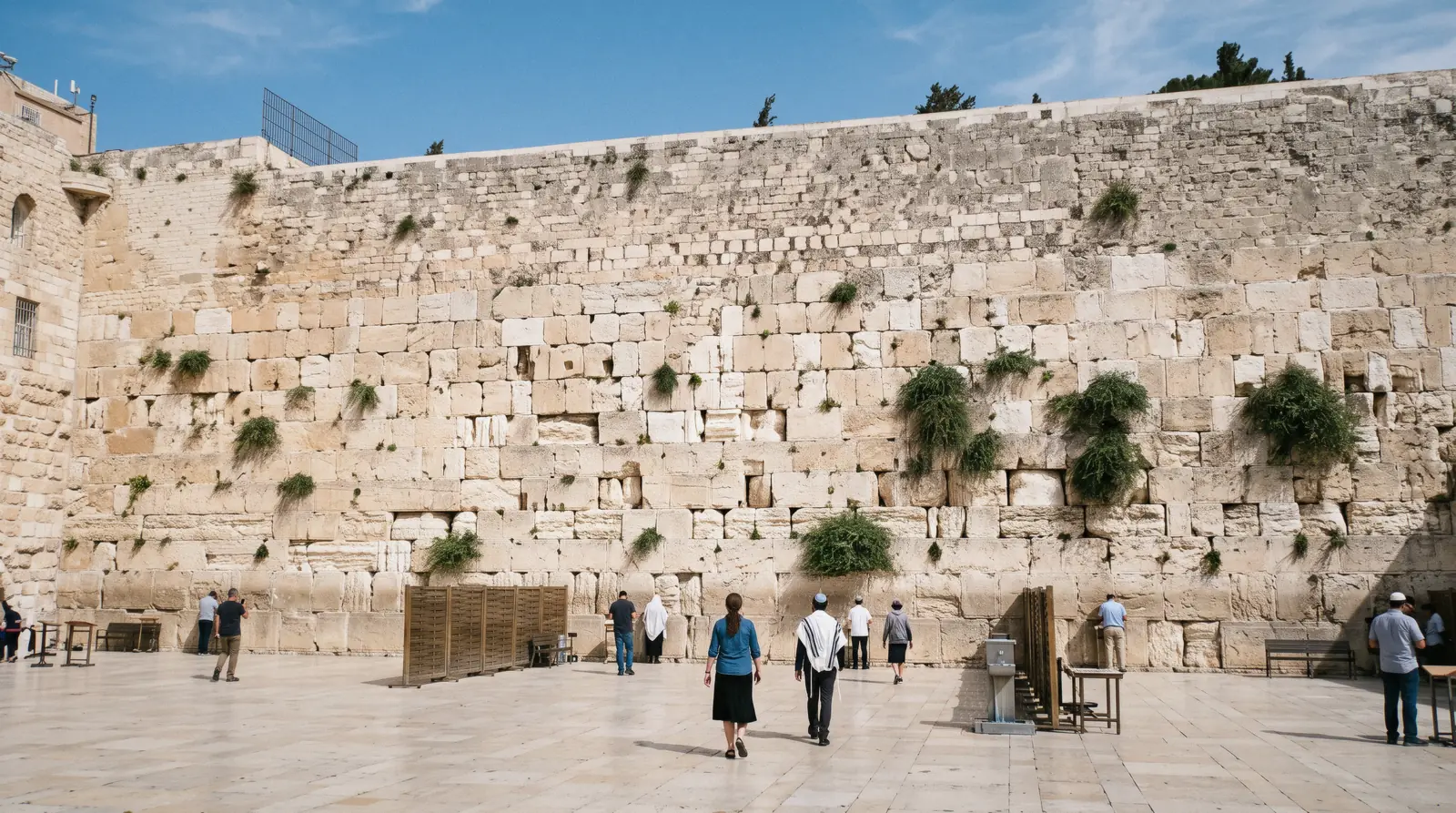
The Western Wall, called the Kotel in Hebrew and long known as the Wailing Wall, is the retaining wall of the Temple Mount plateau and the holiest place where Jews pray today. The open plaza is free and open to all, and below and to the north the Western Wall Tunnels expose the wall's buried length on guided visits only. To make sense of it all in one morning, a guided walk such as the four-hour Old City walking tour is the easiest way in. For the full shortlist, see the top Jerusalem tours.
Quick answer Western Wall in brief
The Western Wall is a 488-metre retaining wall of the Temple Mount plateau in the Old City of Jerusalem. Its open-air prayer section is free, open to all faiths and open daily, with men and women praying in separate areas. The buried 400-plus metres lie inside the Western Wall Tunnels, visited on guided tours booked through the Western Wall Heritage Foundation.
Key takeaways
- The plaza is free and open daily, modest dress required, and the Tunnels need an advance booking through the foundation
- Best first visit: the four-hour Old City walking tour from Jaffa Gate, 4.8 rated
- Short on time? The half-day Holy Sepulchre and Western Wall tour ends in the Old City by early afternoon
- Read how the Wall fits a full day in our Jerusalem Old City guide
Key facts
Opening hours
| Western Wall plaza, daily | 00:00–24:00 |
|---|
Closed The plaza never closes. The Temple Mount plateau above is closed to non-Muslim visitors on Fridays, Saturdays and various holidays
Admission
- Adult
- Free (the plaza). Western Wall Tunnels: guided visits only, price on the foundation's booking page
- Free
- The open-air prayer plaza
Planning it
- Time needed
- Our estimate: 30 minutes at the plaza, half a day for the Wall, the tunnels and the plateau together
- Book ahead
- Optional — walk-up usually fine
- Address
- Western Wall plaza, Old City of Jerusalem, entered through the Jewish Quarter or Dung Gate
Which Western Wall tour should you book?
The Wall itself is free, so what you are buying is a guide who fits it into the Old City. These three tours all include the Western Wall and start from Jerusalem.
Do you want a short walk on foot, or a vehicle tour with hotel pickup that finishes by early afternoon?
| Option | Price | Length | Includes | Book |
|---|---|---|---|---|
| Jerusalem: Guided Walking Tour of the Old CityBest all-round pick for first-time visitors who want the full Old City on foot | from $57 per person | 4 hours | Live guide from Jaffa Gate, Western Wall, Via Dolorosa and Holy Sepulchre, no entry fees on the route | Check Availability |
| Old City of Jerusalem Guided Walking TourThe same route in smaller groups of up to 30, with the Temple Mount in the running order | from $58 per person | 4 hours | Guide outside Jaffa Gate, Holy Sepulchre, Temple Mount or viewpoint, Western Wall, Via Dolorosa, souk | Check Availability |
| Jerusalem Half Day Tour: Holy Sepulchre and Western WallTravellers who want pickup from their hotel and a relaxed half day | from $50 per person | About 7 hours including pickup, ends around 13:00 | Hotel pickup, Mount Scopus view, Jewish Quarter, Western Wall, Holy Sepulchre, entry fees included | Check Availability |
All three come with free cancellation up to 24 hours before the start. Figures current in Q4 2026.
All Western Wall tours on this site
Three guided options that include the Western Wall, all bookable now with free cancellation up to 24 hours before.
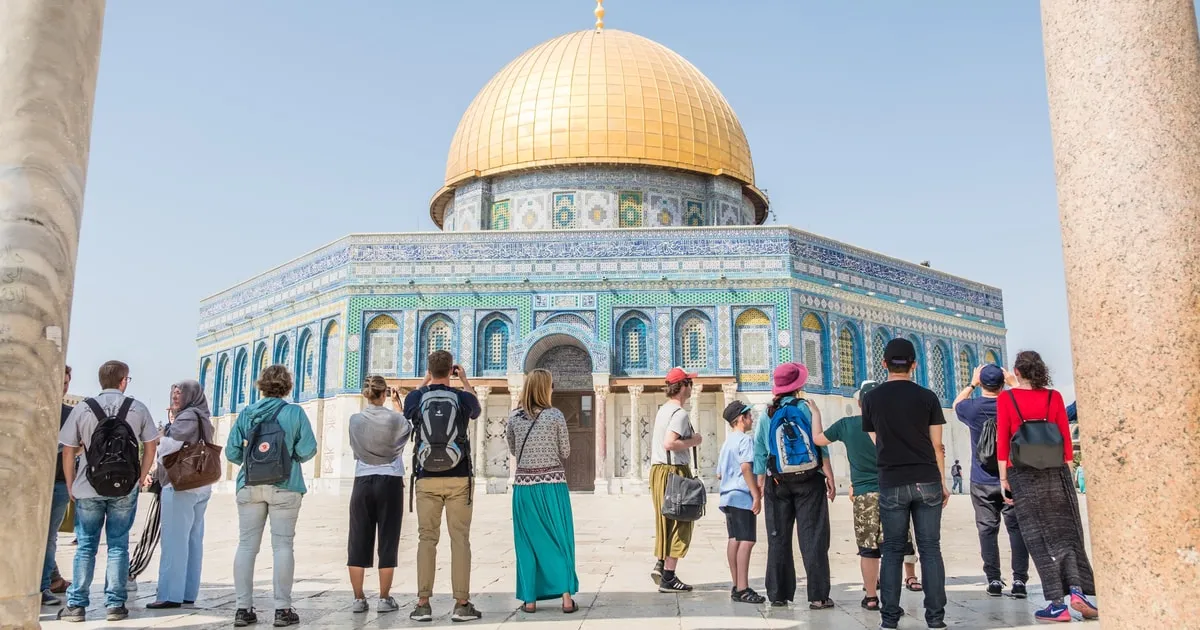 from $57
Top rated
Jerusalem: Guided Walking Tour of the Old City
Four hours on foot from Jaffa Gate: the Western Wall, the Via Dolorosa and the Church of the Holy Sepulchre with a live guide.
Check Availability from $58
Same route on Viator
Old City of Jerusalem Guided Walking Tour
The Holy Sepulchre, the Temple Mount, the Western Wall, the Via Dolorosa and the souk in four hours from Jaffa Gate.
Check Availability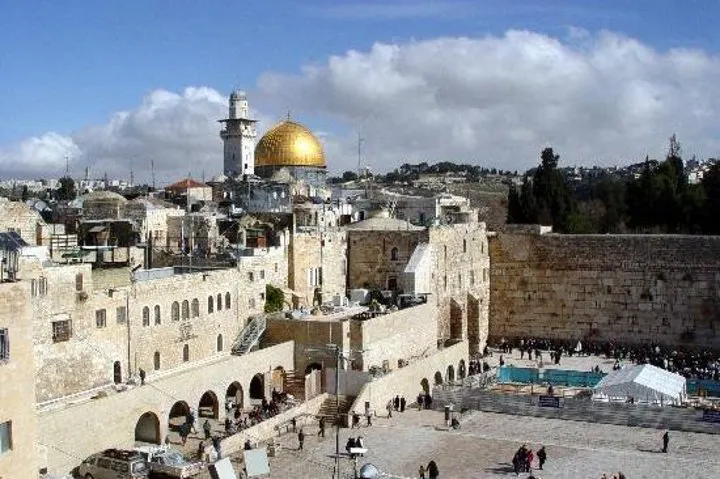 from $50
Mornings only
Jerusalem Half Day Tour: Holy Sepulchre and Western Wall
Mount Scopus view, the Jewish Quarter, the Western Wall and the Holy Sepulchre, finishing in the Old City by early afternoon.
Check AvailabilityPrices, ratings and details are the platform's own. dollar figures are the listed prices — the platform bills in your account's currency.
What the Western Wall is and why it matters
One wall, three names and a lot of history compressed into 488 metres.
One wall, three names
The Western Wall is the retaining wall built to support the expanded plateau that Jews and Christians call the Temple Mount. The whole western retaining wall runs 488 metres. The best-known section, the open-air prayer area, is shortened by Jews to the Kotel and was long called the Wailing Wall in the West, a reference to Jews weeping at the site. In the Arab and Islamic world the same wall is known as the Buraq Wall.
Jewish tradition holds that the Temple stood on the plateau above and that the Holy of Holies, the most sacred point in the Jewish faith, lies just above and behind the prayer section. Because of the entry restrictions on the plateau itself, the Wall is the holiest place of Jewish prayer. That is what makes a strip of limestone the centre of Jewish prayer worldwide.
Herodian stones at the bottom, newer stones above
At the prayer section, just over half the wall's total height dates from the end of the Second Temple period and is believed to have been begun by Herod the Great. Read it from the bottom up. The very large blocks at the base are Herodian, the medium-sized courses above were added in the Umayyad period, and the small stones of the top courses are more recent, mostly Ottoman work.
Seventeen courses of the wall sit below today's street level, which is exactly what the Western Wall Tunnels expose. Only about 60 metres of the wall is open air at the prayer plaza. The rest of its original 488 metres is hidden under the buildings of the Muslim Quarter, and the tunnels follow it north.
The two halves: plaza and tunnels
A visit divides cleanly into a free open-air part and a paid, guided underground part.
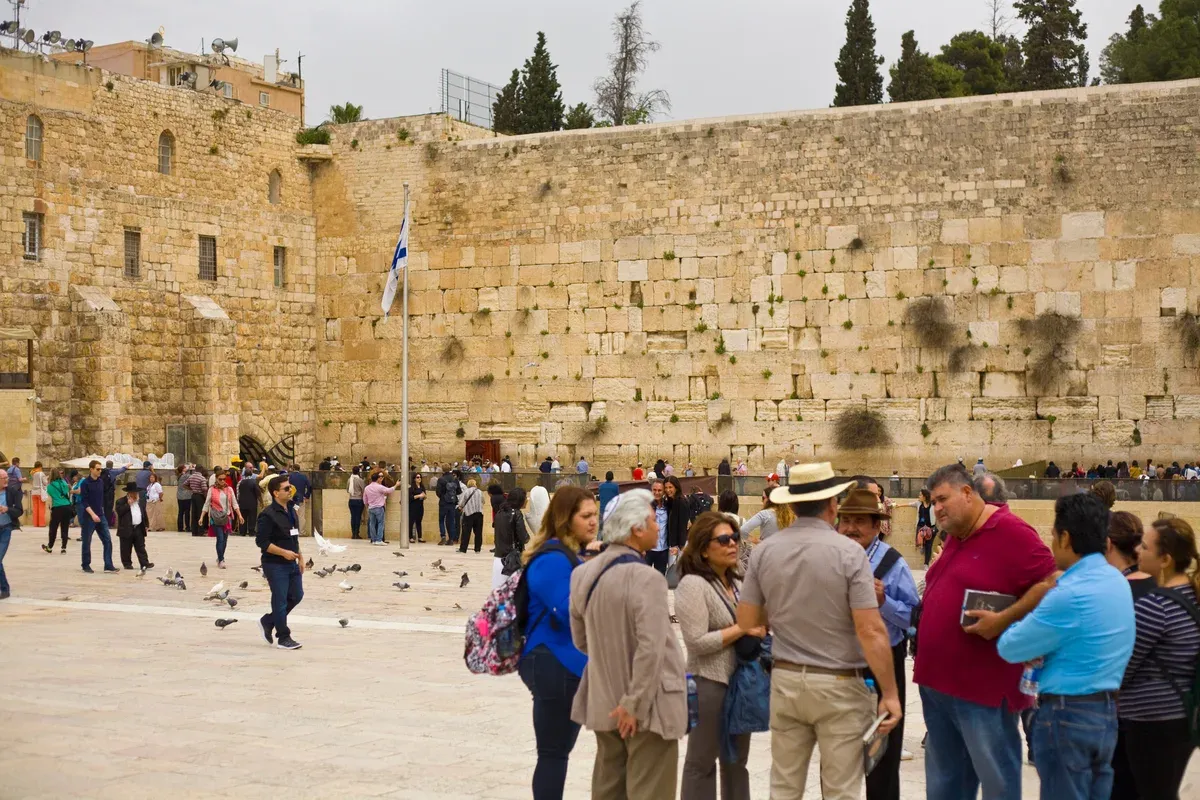
The Western Wall plaza with the prayer section in front of the Herodian stones. Photo: Mike Norton, CC BY 2.0, via Wikimedia Commons
The plaza: free, open to all
The Western Wall plaza is open to everyone, of every faith and none, at no charge. It is open at all hours, every day. At the prayer area itself, men and women pray in separate sections divided by a partition, so expect that layout and head to the correct side. Security checks at the entrance are routine.
You can stand close to the stones, watch the prayers, and slip a written note into the cracks between the blocks as many visitors do. Dress modestly: covered shoulders and knees, no short shorts. Men should cover their heads on the prayer side, and cardboard kippot are available free at the entrance.
The Tunnels: guided only, booked ahead
The Western Wall Tunnel runs north from where the open-air prayer section ends, along the rest of the wall's buried length and up to its northern end. Most of it continues the open-air wall and lies beneath the buildings of the Muslim Quarter. Several adjacent excavated underground spaces can be visited together with the main tunnel, which is why the plural Western Wall Tunnels is often used.
You cannot walk in on your own. The Tunnels are visited only on a guided tour booked through the Western Wall Heritage Foundation, whose routes include the classic Great Stone route along the length of the Wall and the newer Great Bridge Route. Prices and times appear only on the foundation's booking page, so check there and reserve ahead, as slots fill. A Jerusalem private tour can be arranged to combine the Old City with a tunnel slot you book separately.
The Temple Mount plateau above
The Wall is the retaining wall of this plateau, and the two visits pair naturally.
What it is and how visiting works
The Temple Mount, known in Arabic as Haram al-Sharif, is the elevated plateau in the Old City whose retaining walls include the Western Wall. It is the Islamic religious compound of al-Aqsa, containing the al-Aqsa Mosque and the Dome of the Rock, completed in 692 and among the oldest extant Muslim structures in the world. Jewish tradition identifies it as the site of the First and Second Temples, and it is venerated in Judaism, Christianity and Islam.
Non-Muslim visitors enter only through the Mughrabi Gate, by the footbridge from the Western Wall plaza, during limited morning and early-afternoon hours from Sunday to Thursday. The plateau is closed to visitors on Fridays, Saturdays and various Muslim and Jewish holidays, and can close at short notice, so check on the day. Visitors stay in the open courtyards and do not enter the buildings. Modest dress applies here too.
What you see, in walking order
A natural circuit from Jaffa Gate through the Jewish Quarter down to the Wall and up to the plateau.
Jaffa Gate to the Jewish Quarter
Most walking tours, including the guided Old City walk, start at Jaffa Gate, the main western entrance to the Jerusalem Old City. From there the route climbs through the Armenian Quarter and into the Jewish Quarter, past the Cardo, the excavated Byzantine main street, and the Hurva Synagogue with its tall dome.
Walk about 15 minutes, our estimate, and the lane drops towards the Dung Gate, the practical entrance for both the Wall plaza and the City of David park to the south.
The plaza, the stones and the footbridge
Through Dung Gate you reach the plaza. Give yourself 20 to 30 minutes here: approach the prayer section, look up at the Herodian blocks, and if you want a note placed in the wall, write it before you go through security. From the plaza the Mughrabi footbridge rises to the Mughrabi Gate of the Temple Mount for visitors allowed up on that day.
Facing the Wall, the archaeology continues to your right in the Davidson area and to your left underground in the Tunnels. If you have a tunnel booking, it usually starts from the plaza side near the northern end of the prayer section.
Hours, dress code and quiet times
Simple rules, strictly applied, and a few times worth planning around.
Hours and Shabbat
The plaza is open at all hours, every day. The Western Wall Tunnels run on guided slots booked through the foundation, with times published only on its booking page. The Temple Mount plateau admits non-Muslim visitors in limited morning and early-afternoon windows Sunday to Thursday and is closed to visitors on Fridays, Saturdays and various holidays.
Shabbat runs from Friday sunset to Saturday nightfall. The plaza itself stays open, and Friday evening at the Wall is a well-attended prayer time, busy and loud in a good way if you want atmosphere, crowded if you want quiet. Israeli public transport shuts down for Shabbat, which affects the rest of a Friday and Saturday plan, as our getting around Jerusalem guide explains.
Dress and behaviour
Modest dress is required at the Wall: covered shoulders and knees for everyone. Men cover their heads in the prayer area, and free kippot are available. At the men's and women's sections, keep to the correct side and do not cross the partition line.
Photography is generally accepted in the plaza, but turn it off on Shabbat and be discreet with faces during prayer. This is a place of worship first. The same modest rule holds on the Temple Mount plateau and on the tunnels tour.
Getting there
Old City gates, light rail, and where tours drop you.
On foot, by tram, or on a tour
The classic approach is on foot through the Old City from Jaffa Gate, about 15 to 20 minutes through the Jewish Quarter, our estimate, or through Dung Gate from the south. The light rail Line L1 stops near Damascus Gate, from where the walk through the Muslim Quarter to the Wall is about 15 minutes, our estimate. Note that the tram does not run on Saturday.
With a tour the logistics disappear: the half-day Western Wall and Holy Sepulchre tour picks you up at your Jerusalem hotel and drops you in the Old City around 13:00, while the four-hour walking tour simply meets at Jaffa Gate. Drivers and taxis cannot enter the Old City itself, so every visit ends in a walk.
How much time to give it
Thirty minutes at the plaza is enough to pray, look and photograph. Add the Tunnels on a guided slot and the Mughrabi Gate ascent when the plateau is open, and the whole complex deserves half a day.
Three routings below cover the realistic options, from a 30-minute stop on a wider Jerusalem itinerary to a full morning with the tunnels. If you only have one day in the city, our things to do in Jerusalem guide shows how the Wall pairs with the Church of the Holy Sepulchre.
| Routing | Time, our estimate | Good for |
|---|---|---|
| Plaza only, from Dung Gate | 30 to 45 minutes | A short stop on a one-day visit |
| Wall plus Temple Mount plateau on a weekday morning | 2 to 3 hours | Sunday to Thursday mornings, plateau open |
| Wall, plateau and Western Wall Tunnels with a booked slot | Half a day | Anyone who wants the full story of all 488 metres |
The Western Wall in time
Eight dates that explain the stones you are looking at.
-
c. 957 BC
Solomon's Temple
According to Jewish and Samaritan tradition and scriptures, King Solomon built the First Temple on the plateau above.
-
587 BC
Destruction of the First Temple
The Neo-Babylonian Empire destroyed the Temple and the city in the Siege of Jerusalem.
-
516 BC
The Second Temple
A second temple was constructed under Zerubbabel on the same plateau.
-
First century BC
Herod expands the plateau
Herod the Great rebuilt the retaining walls, including the western one, to enlarge the compound, and the huge lower courses of the Wall are his work.
-
70 CE
Roman destruction
The Roman Empire destroyed the Second Temple, leaving the retaining walls as the surviving structure.
-
692
Dome of the Rock completed
On the plateau above, the Dome of the Rock was completed, becoming one of the oldest extant Muslim structures in the world.
-
Ottoman period
The top courses
The small stones of the wall's uppermost courses date especially from the Ottoman era.
-
Modern era
The Tunnels opened
Excavation exposed the wall's buried northern length under the Muslim Quarter, now visited on Western Wall Heritage Foundation tours.
Sources: Wikipedia, Western Wall, Western Wall Tunnel and Temple Mount articles.
Do and do not at the Western Wall
Do
- Go through security with time to spare, it is routine and quick on normal days
- Cover shoulders and knees, and have men take one of the free kippot before the prayer area
- Write your note before you arrive so you can go straight to the stones
- Split your visit: the free plaza in the morning, a booked Tunnels slot after
- Check on the day whether the Temple Mount plateau is open before you plan the Mughrabi Gate
- Book the half-day tour with hotel pickup if walking across the city is too much
Don't
- Don't cross the partition between the men's and women's sections
- Don't photograph worshippers at close range, and no photos on Shabbat
- Don't show up for the Tunnels without a reservation, they are guided only
- Don't plan a first visit on Friday or Saturday if seeing the plateau matters, it is closed to visitors then
- Don't wear beachwear or bare shoulders anywhere in the compound
- Don't forget Shabbat transport rules when planning how to get back
Five things most visitors do not know
Small facts that change how you read the stones.
The list
Most people see 60 metres of wall and think that is the Wall.
- The full western retaining wall runs 488 metres, but only about 60 metres is open air at the prayer section Wikipedia, Western Wall Tunnel
- Seventeen courses of the wall lie below today's street level, which is what the tunnels expose Wikipedia, Western Wall
- In the Arab and Islamic world the same wall is called the Buraq Wall Wikipedia, Western Wall
- The huge blocks at the bottom are Herodian, the middle courses Umayyad and the small top stones mostly Ottoman Wikipedia, Western Wall
- The Tunnels are plural because several adjacent excavated underground spaces can be visited with the main tunnel Wikipedia, Western Wall Tunnel
Western Wall map and what is nearby
The Wall at the centre, with the places that make up a morning in the south and east of the Old City.
- 1 Western WallThe open-air prayer section of the 488-metre retaining wall, free and open daily.
- 2 Western Wall TunnelThe guided underground route along the wall's buried northern length, booked through the Heritage Foundation.
- 3 Dung GateThe practical entrance for the Wall plaza and the City of David park to the south.
- 4 Temple MountThe plateau above the Wall, home to the Dome of the Rock and the Al-Aqsa Mosque, entry through the Mughrabi Gate for non-Muslim visitors.
- 5 City of DavidThe archaeological park south of Dung Gate with self-guided entry and Hezekiah's tunnel.
- 6 Via DolorosaThe traditional route of the Way of the Cross through the Muslim Quarter, walking distance from the plaza.
Numbers match the pins on the map.
Near the Western Wall
Three places that pair naturally with a visit to the Wall.
City of David
The archaeological park south of the Old City walls, where the tourable Siloam tunnel and the Pilgrimage Road sit. It combines easily with the Wall, see the City of David and Underground Jerusalem day tour.
10 min walk from Dung Gate (our estimate) Read the guideVia Dolorosa
The route through the Muslim Quarter traditionally walked as the Way of the Cross, ending at the Holy Sepulchre. The guided Old City walk links it to the Wall in one morning.
15 min walk (our estimate) Read the guideMount of Olives
The viewpoint ridge over the Old City with Gethsemane at its foot, and the classic photo angle on the Dome of the Rock. The Mount of Olives guided tour covers it in three and a half hours.
Across the Kidron valley, best reached by vehicle Read the guideWestern Wall questions
What is so special about the Western Wall?
It is a 488-metre retaining wall of the Temple Mount plateau, and the open prayer section is the holiest place of Jewish prayer. The lower stones were laid under Herod the Great for the Second Temple compound. Standing before it, you are at the base of the plateau where both Jewish Temples stood according to tradition.
Are Christians allowed to pray at the Western Wall?
Yes. The plaza is open to everyone of every faith and none, at no charge, at all hours. Visitors of any background may approach the stones and pray. Modest dress is required for all, and men are asked to cover their heads in the prayer area, with free kippot provided.
What do Muslims think of the Western Wall?
In the Arab and Islamic world the wall is known as the Buraq Wall, and it forms the western retaining wall of the Haram al-Sharif, the compound holding the Al-Aqsa Mosque and the Dome of the Rock, which is the third holiest site in Islam. We describe each tradition's view of the site as its own, without comment.
Can Muslims visit the Western Wall?
Yes, the plaza is open to all visitors regardless of faith, with the same security check and modest dress rules for everyone. Muslims also enter the plateau above through their own gates. Non-Muslim visitors to the plateau use the Mughrabi Gate only, during limited Sunday to Thursday hours.
Do I need to book the Western Wall Tunnels?
Yes. The Tunnels are visited only on guided tours booked through the Western Wall Heritage Foundation at english.thekotel.org. Prices and times appear only on the foundation's booking page, so reserve ahead and check your slot the day before. The plaza itself needs no booking at all.
Is the Western Wall free to visit?
The open plaza is completely free and open daily. Costs appear only if you add the guided Tunnels tour, booked with the foundation, or the paid entry at neighbouring sites. If you want the Wall explained rather than just seen, the half-day tour from your hotel costs from $50 per person with entry fees included.
When is the best time to visit the Western Wall?
Weekday mornings are quietest, our estimate, and they are also the window when the Temple Mount plateau above admits non-Muslim visitors. Friday evening is the most atmospheric and the most crowded. For planning around weather and seasons, see our best time to visit Jerusalem guide.
Can I see the Temple Mount and the Wall in one visit?
Yes, and they belong together. Come Sunday to Thursday morning, see the plaza first, then use the Mughrabi footbridge from the plaza to the Mughrabi Gate. On Fridays, Saturdays and various holidays the plateau is closed to visitors, and tours such as the Old City guided walk substitute a viewpoint instead.
Prices, hours and terms are set by the venue or operator and confirmed at checkout.
We may earn a commission if you book through one of our links, at no extra cost to you. Full affiliate disclosure